"You Don’t Need a Shoulder to Cry On.
You Need a Roadmap."
A structured, science-based Protocol for men who don't have a year
to waste on a break up...
with a guarantee no therapist would EVER offer.







"You Don’t Need a
Shoulder to Cry On.
You Need a Roadmap."
A structured, science-backed system for men who don't have a year
to waste on a break up...
with a guarantee no therapist would ever offer.

Why You Can't Just "Move On"

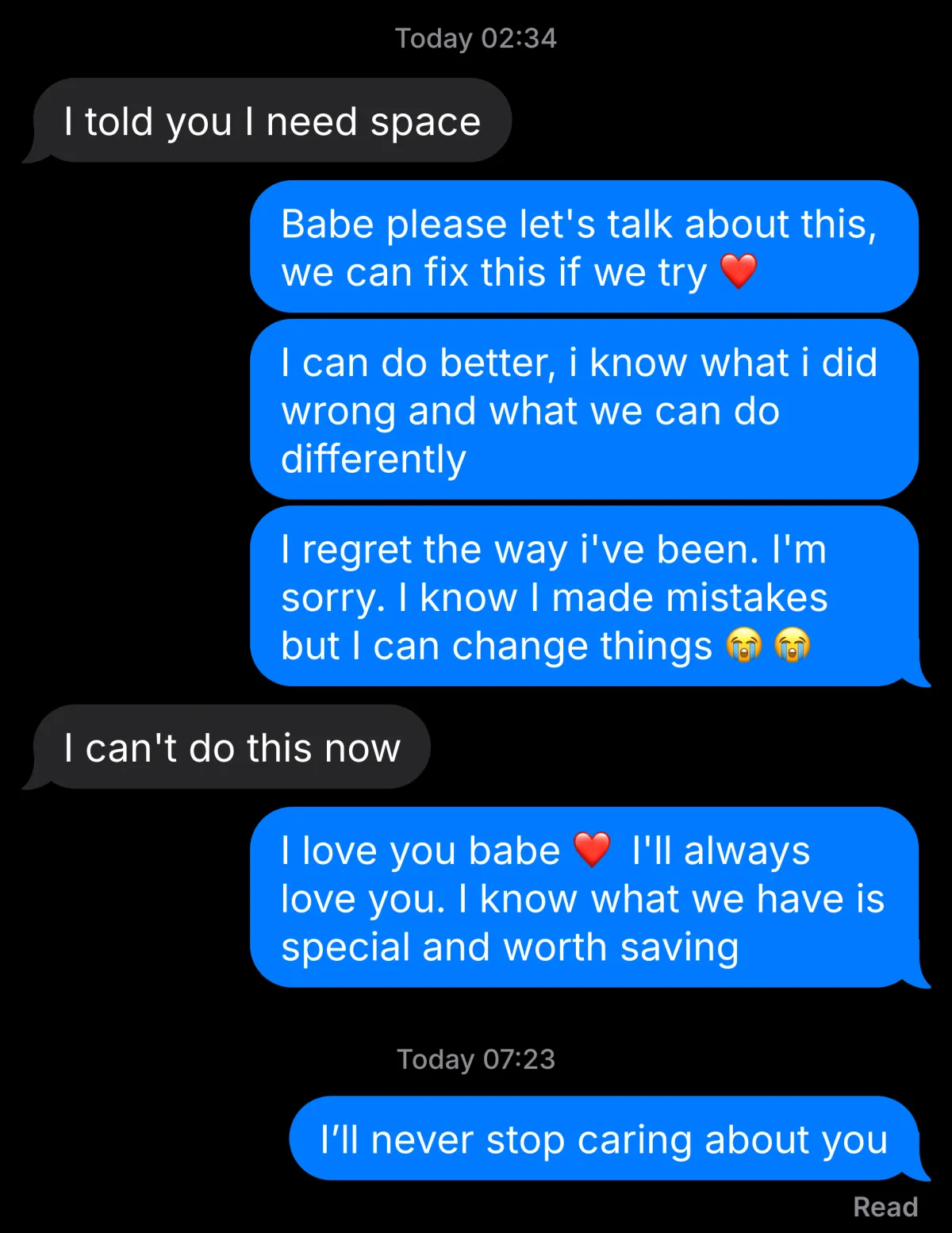
The shame is unbearable.
The desperation to get her back—or at least understand what happened—feels like an addiction you can't kick.
You're replaying the same conversation for the hundredth time.
Every word.
Every inflection.
Searching for the moment it all went wrong.
Your friends tell you to "get back out there." Every article says to focus on yourself and give it time.
But they don't understand what this actually feels like.

The guilt eats at you.
Maybe if you'd been different. Said the right thing. Been more present. Less needy. More successful. The shame of missing someone who clearly doesn't miss you back makes you feel pathetic.
And the fear?
The fear is paralyzing. That you'll never feel this way about anyone again. That you blew your last shot at real love. That you're going to be alone forever while she moves on in two weeks like you never existed.

The loop you can't escape.
You feel like you're losing your mind.
And worst of all...
Everything You've Tried Has Failed

Your friends told you to get drunk and hook up with someone else. You tried. It made you feel worse.

Your therapist asks how that makes you feel, then schedules another session for next week. You leave feeling exactly the same.

The internet says to journal, go no-contact, and "focus on yourself." You've done all of it. You're still checking her Instagram at 2am.

Your family says give it time. It's been three months. Six months. A year. Time isn't fixing anything.
The advice isn't wrong because the people giving it are stupid. It's wrong because it's not designed for what you're actually experiencing.
A neurological addiction doesn't respond to journaling. A psychological crisis doesn't resolve through patience.
You don't need more time. You need the right intervention.
Here's what nobody tells you:
Traditional therapy
doesn't work for this.
Sitting in a room talking about your feelings for months — or years — while your therapist nods sympathetically — that's designed for women (literally). It's slow.
It's open-ended. It's built to explore emotions, not solve problems.
You don't need exploration. You need extraction.
12 Weeks

In and out. Fixed.
"I spent eight months in therapy after she left. Every week I'd talk about how I felt, and every week I'd leave feeling exactly the same. I wasn't getting better. Alex's approach was the opposite. His protocol is structured, direct, and focused on actually fixing the problem.
Within three weeks, the obsessive thoughts started fading. By week twelve, I was done. Not just over her either. I was stronger than I'd been before the relationship even started."
— James K., 34, Finance
Why You Can't Just "Move On"

The shame is unbearable.
The desperation to get her back—or at least understand what happened—feels like an addiction you can't kick.
You're replaying the same conversation for the hundredth time.
Every word.
Every inflection.
Searching for the moment it all went wrong.
Your friends tell you to "get back out there." Every article says to focus on yourself and give it time.
But they don't understand what this actually feels like.
The guilt eats at you.
Maybe if you'd been different. Said the right thing. Been more present. Less needy. More successful. The shame of missing someone who clearly doesn't miss you back makes you feel pathetic.
And the fear?
The fear is paralyzing. That you'll never feel this way about anyone again. That you blew your last shot at real love. That you're going to be alone forever while she moves on in two weeks like you never existed.
You feel like you're losing your mind.
And worst of all...
Everything You've Tried Has Failed
Your friends told you to get drunk and hook up with someone else. You tried. It made you feel worse.
Your therapist asks how that makes you feel, then schedules another session for next week. You leave feeling exactly the same.
The internet says to journal, go no-contact, and "focus on yourself." You've done all of it. You're still checking her Instagram at 2am.
Your family says give it time. It's been three months. Six months. A year. Time isn't fixing anything.
The advice isn't wrong because the people giving it are stupid. It's wrong because it's not designed for what you're actually experiencing.
A neurological addiction doesn't respond to journaling. A psychological crisis doesn't resolve through patience.
You don't need more time. You need the right intervention.
Here's what nobody tells you:
Traditional therapy
doesn't work
for this.
Sitting in a room talking about your feelings for months — or years — while your therapist nods sympathetically... That's designed for women (literally).
It's slow. It's open-ended. It's built to explore emotions, not solve problems.
You don't need exploration. You need extraction.
12 Weeks
In and out. Fixed.
"I spent eight months in therapy after she left. Every week I'd talk about how I felt, and every week I'd leave feeling exactly the same. I wasn't getting better. Alex's approach was the opposite. His protocol is structured, direct, and focused on actually fixing the problem.
Within three weeks, the obsessive thoughts started fading. By week twelve, I was done. Not just over her either. I was stronger than I'd been before the relationship even started."
— James K., 34, Finance
The Unbreakable Protocol
The only breakup recovery system built on addiction science, not platitudes.
The Unbreakable Protocol isn't therapy. It's not coaching. It's a systematic intervention designed to do three things:

Break the addiction cycle
You'll stop obsessively checking her social media. Stop replaying conversations at 3 AM. Stop feeling that physical pull to reach out. The compulsion ends—not through willpower, but through neuroscience.

Eliminate the emotional chaos
The guilt, shame, and despair that's eating you alive? Gone. You'll process what happened without getting stuck in it. You'll understand why this hurt so much without letting it define you. You'll grieve what you lost without being destroyed by it.

Rebuild a stronger identity
You won't just "move on." You'll become
a fundamentally different man—one who would never tolerate what you just went through. You'll outgrow the version of yourself that accepted less than you deserved. You'll use this crisis as fuel to become unbreakable.
In 12 weeks, you'll wake up and realize you haven't thought about her in days. You'll barely recognize who you were three months ago.
This isn't about feeling better. It's about becoming better.
- Sam, Managing Director, 41
- Adam, Engineer, 33
- Mark, Chief Creative Officer, 35
The Unbreakable Protocol
The only breakup recovery system built on addiction science, not platitudes.
The Unbreakable Protocol isn't therapy. It's not coaching. It's a systematic intervention designed to do three things:
Break the addiction cycle
You'll stop obsessively checking her social media. Stop replaying conversations at 3 AM. Stop feeling that physical pull to reach out. The compulsion ends—not through willpower, but through neuroscience.
Eliminate the emotional chaos
The guilt, shame, and despair that's eating you alive? Gone. You'll process what happened without getting stuck in it. You'll understand why this hurt so much without letting it define you. You'll grieve what you lost without being destroyed by it.
Rebuild a stronger identity
You won't just "move on." You'll become a fundamentally different man—one who would never tolerate what you just went through. You'll outgrow the version of yourself that accepted less than you deserved. You'll use this crisis as fuel to become unbreakable.
In 12 weeks, you'll wake up and realize you haven't thought about her in days. You'll barely recognize who you were three months ago.
This isn't about feeling better. It's about becoming better.
- Sam, Managing Director, 41
- Adam, Engineer, 33
- Mark, Chief Creative Officer, 35
12 Weeks. Structured. Results-Driven.
This is a high-intensity, 12-week container for men who are serious about transformation.
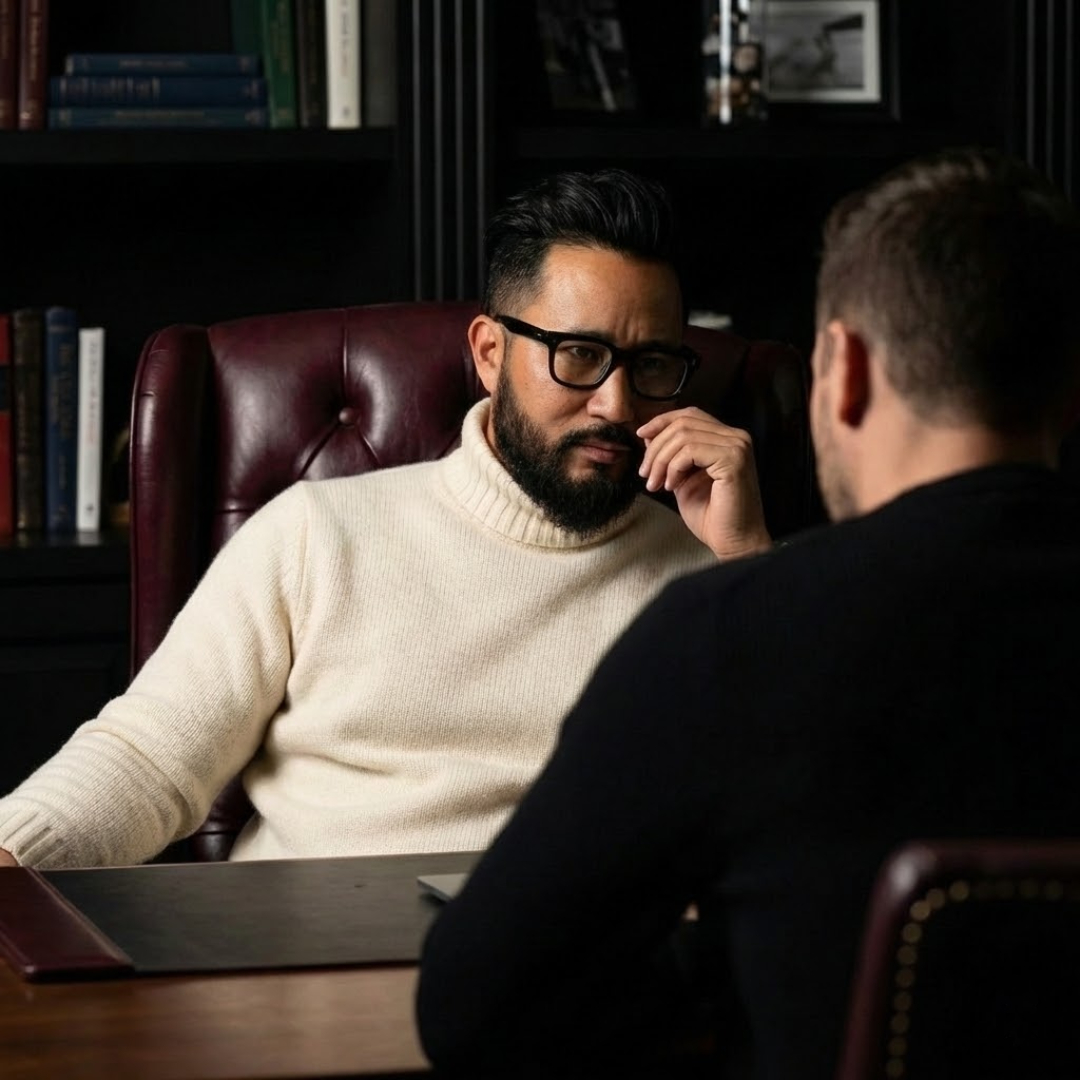
Weekly 1-on-1 Coaching Sessions
Direct work with me, every week, for 12 weeks. Sixty to ninety minutes of focused work, every single week. I'm not going to nod sympathetically while you talk in circles. I'm not going to ask how that makes you feel and wait for the clock to run out.
I'm going to tell you what's actually happening, why you're stuck, and exactly what to do about it. Every session is built around your situation that week—what's coming up, what's pulling you backward, what needs to break.
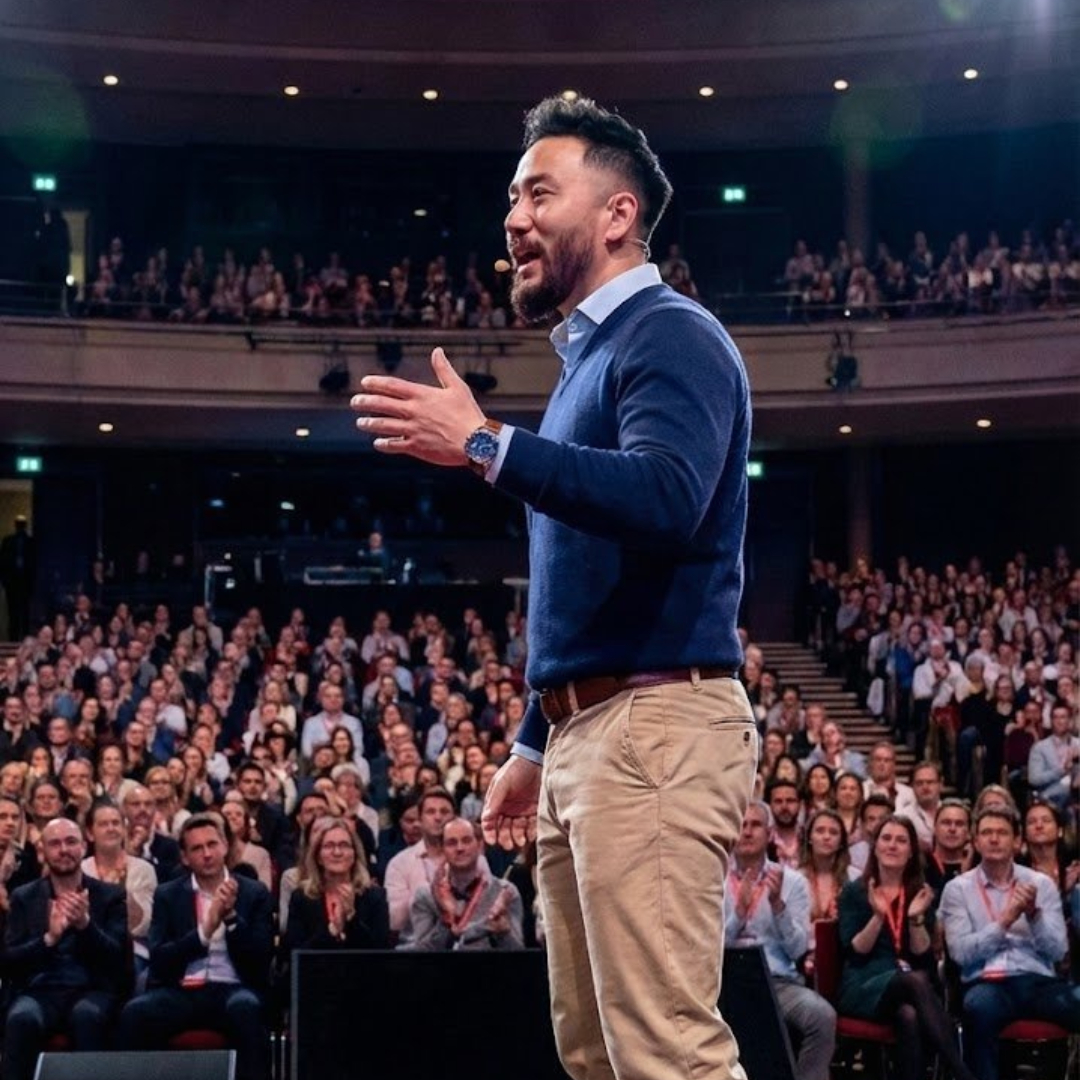
Weekly Live Q&A Session
Every week, I go live and break down the next phase of the Protocol — what's happening in your brain, what to expect, and exactly how to execute.
This isn't just theory. It's tactical, structured, and built around what my clients are actually facing that week.
You can submit questions anonymously. No pressure to share, no group participation required. Just show up, absorb, and ask me your most pressing questions.

The Full Unbreakable Protocol
12 weeks of video modules and written materials designed to take you from chaos to clarity. Each module builds on the last: first we break the addiction, then we process what happened, then we rebuild.
You'll understand the neuroscience behind your obsessive thoughts, learn exactly how to interrupt them, and develop the identity of a man who would never tolerate this again.
Everything is yours to keep and revisit whenever you need it. This is the system I used to save myself—refined over eight years and hundreds of clients.
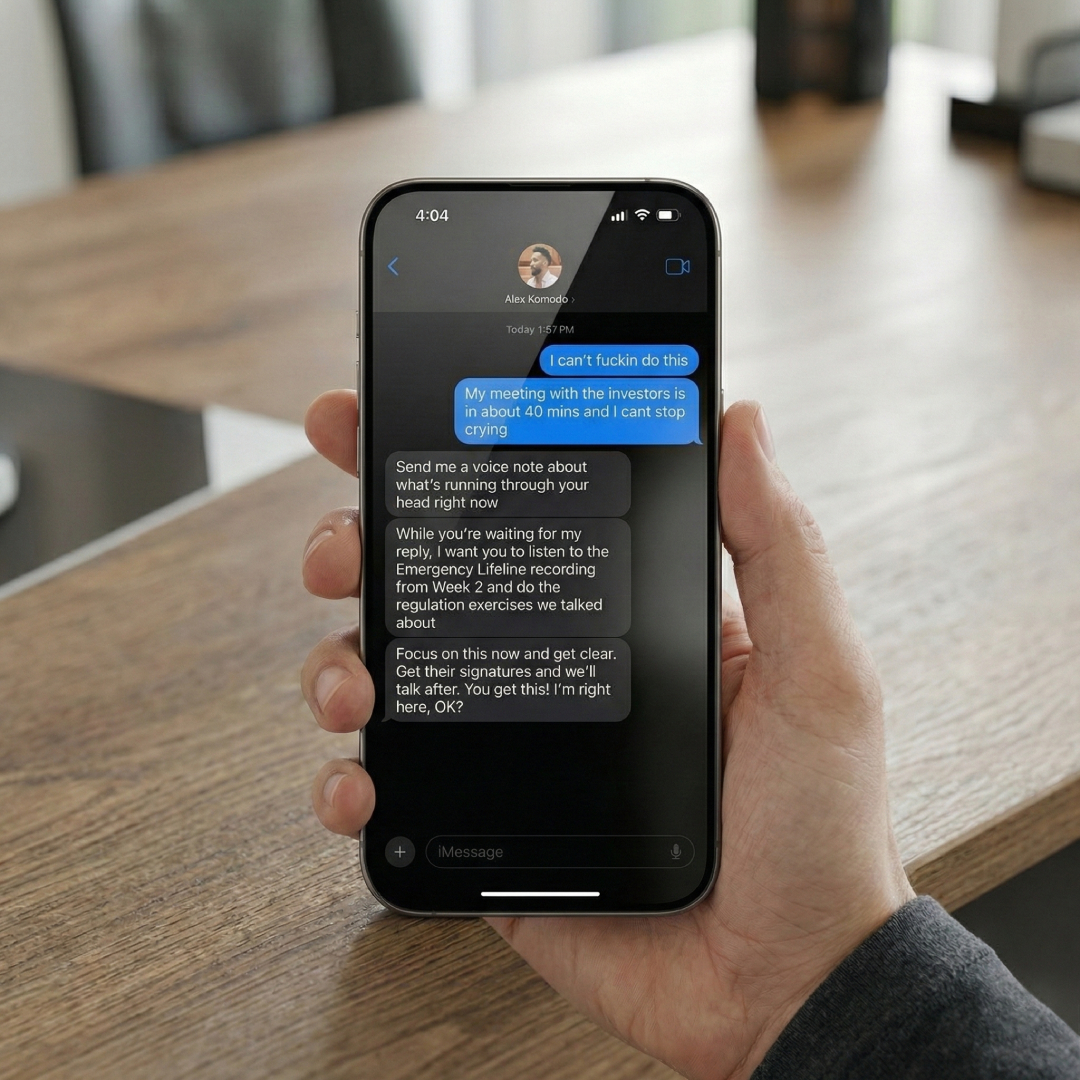
Direct Access To Me, 5 Days A Week
This is the part most coaches won't offer—because it's the hardest to deliver. Between sessions, you have a direct line to me via WhatsApp or Voxer. Not an assistant. Not a chatbot. Me.
When you're about to break no contact at 2am, when a trigger sends you spiraling, when you need someone to step in before you do something you'll regret—I'm there.
I've stopped men from sending career-ending texts. From showing up at her door. From making permanent decisions in temporary moments. That's what this access is for.
When You Join, You'll Also Get:
The No-Contact Emergency Protocol
A quick-reference guide and audio for the moments when you're about to break. What to do, what to tell yourself, how to get through the next thirty minutes without destroying your progress.
Post-Protocol: Dating After Destruction
A bonus module on re-entering dating from a position of strength. How to spot red flags, set boundaries, and build something healthy—without repeating the same patterns.
Lifetime Access to the Alumni Network
After your 12 weeks, you stay connected. You'll be surrounded by men who've built companies, closed eight-figure deals, and led teams of hundreds.
This isn't a support group. It's a private network of high-caliber men who've seen each other at rock bottom and rebuilt together.
One 30-Minute Booster Call
Redeemable anytime in the six months after you complete the program. A safety net for when life throws something unexpected at you.

The Only
"Unlimited Guarantee"
in the Industry
If you're not better in 12 weeks,
we keep going until you are.
This isn't a marketing gimmick.
It's a promise.
If you follow the protocol and you're still not where you need to be after 12 weeks, I'll keep working with you—at no extra cost—until you are. You don't need to believe in yourself right now. You just need to believe in The Protocol.
It's carried hundreds of men before you.
It will carry you through too.
That is my commitment to you,
Alexander Lee
This isn't for everyone.
If you're looking for cheap advice, endless "processing," or someone to tell you it's okay to wallow—this isn't it.
But if you're ready to use this breakup as a catalyst to become the strongest version of yourself—let's talk.
12 Weeks. Structured. Results-Driven.
This is a high-intensity, 12-week container for men who are serious about transformation.
Weekly 1-on-1 Coaching Sessions
Direct work with me, every week, for 12 weeks. Sixty to ninety minutes of focused work, every single week. I'm not going to nod sympathetically while you talk in circles. I'm not going to ask how that makes you feel and wait for the clock to run out.
I'm going to tell you what's actually happening, why you're stuck, and exactly what to do about it. Every session is built around your situation that week—what's coming up, what's pulling you backward, what needs to break. This isn't therapy. This is intervention.
Weekly Live Q&A Session
Every week, I go live and break down the next phase of the Protocol — what's happening in your brain, what to expect, and exactly how to execute.
This isn't just theory. It's tactical, structured, and built around what my clients are actually facing that week.
You can submit questions anonymously. No pressure to share, no group participation required. Just show up, absorb, and ask me your most pressing questions.
The Full Unbreakable Protocol
12 weeks of video modules and written materials designed to take you from chaos to clarity. Each module builds on the last: first we break the addiction, then we process what happened, then we rebuild.
You'll understand the neuroscience behind your obsessive thoughts, learn exactly how to interrupt them, and develop the identity of a man who would never tolerate this again.
Everything is yours to keep and revisit whenever you need it. This is the system I used to save myself—refined over eight years and hundreds of clients.
Direct Access To Me, 5 Days A Week
This is the part most coaches won't offer—because it's the hardest to deliver. Between sessions, you have a direct line to me via WhatsApp or Voxer. Not an assistant. Not a chatbot. Me.
When you're about to break no contact at 2am, when a trigger sends you spiraling, when you need someone to step in before you do something you'll regret—I'm there.
I've stopped men from sending career-ending texts. From showing up at her door. From making permanent decisions in temporary moments. That's what this access is for.
When You Join, You'll Also Get:
The No-Contact Emergency Protocol
A quick-reference guide and audio for the moments when you're about to break. What to do, what to tell yourself, how to get through the next thirty minutes without destroying your progress.
Post-Protocol: Dating After Destruction
A bonus module on re-entering dating from a position of strength. How to spot red flags, set boundaries, and build something healthy—without repeating the same patterns.
Lifetime Access to the Alumni Network
After your 12 weeks, you stay connected. You'll be surrounded by men who've built companies, closed eight-figure deals, and led teams of hundreds.
This isn't a support group. It's a private network of high-caliber men who've seen each other at rock bottom and rebuilt together.
One 30-Minute Booster Call
Redeemable anytime in the six months after you complete the program. A safety net for when life throws something unexpected at you.
The Only
"Unlimited Guarantee"
in the Industry
If you're not better in 12 weeks,
we keep going until you are.
This isn't a marketing gimmick.
It's a promise.
If you follow the protocol and you're still not where you need to be after 12 weeks, I'll keep working with you—at no extra cost—until you are. You don't need to believe in yourself right now. You just need to believe in The Protocol.
It's carried hundreds of men before you.
It will carry you through too.
That is my commitment to you,
Alexander Lee
This isn't for everyone.
If you're looking for cheap advice, endless "processing," or someone to tell you it's okay to wallow—this isn't it.
But if you're ready to use this breakup as a catalyst to become the strongest version of yourself—let's talk.
I Know Exactly What You're Going Through
My name is Alexander Lee, J.D., B.S. (Psych).
Eight years ago, I was a successful attorney. Degrees in law and psychology. A career I'd built for over a decade. A relationship I thought was leading somewhere.
Then my grandmother—the woman who raised me—was diagnosed with cancer. For six months, I watched her die. The day I came home from her funeral, my girlfriend ended it. “I think we should see other people.” Blindsided. No warning.
The breakup didn't just end the relationship—it destroyed my life. I imploded. I lost my career. I lost my sense of self. I lost everything I'd built.
For months, I couldn't function. Couldn't work. Couldn't sleep. My friends considered me one of the most capable men they knew. Reduced to checking my phone every five minutes like an addict.

Traditional therapy didn't help.
Talking about my feelings week after week wasn't solving the problem—it was keeping me stuck in it.
I needed a solution, not sympathy.


But I had one advantage most men don't: I understood the psychology. I knew what was happening in my brain—the addiction pathways, the grief response, the identity dissolution. So I stopped treating my breakup like a feeling I needed to wait out and started treating it like what it actually was: a neurological and psychological crisis that required a structured intervention.
So I built one.
I Created The Unbreakable Protocol To Save Myself.

It took about three months. The same twelve weeks I now guide my clients through.
I've spent thousands of hours refining this process—studying attachment science, addiction psychology, and identity reconstruction. I've been a guest at professional development conferences and leading universities, talking about why traditional advice fails and what actually works.
I never planned to turn this into a business. Frankly, Big Law is a lot more lucrative... But when I started sharing what I'd learned, I realized how many men were stuck in the same place I'd been—smart, successful men who had no framework for what they were experiencing. They'd tried everything. Nothing worked. Because nothing was designed to work.
The Unbreakable Protocol was.
In the past eight years, I've guided thousands of men through this process. The results are consistent: men who couldn't get out of bed are thriving. Men who thought they'd never love again are in better relationships than they've ever had. Men who were convinced they'd lost their last chance are looking back at their ex with something close to disbelief—wondering why they ever gave her that much power.
That's where you'll be in twelve weeks.
I work with a limited number of men at any given time—typically six to eight. That's not a marketing line. It's the reality of offering the level of access this program requires. If I'm at capacity when you apply, I'll let you know the wait time.

I'm not here to be your friend. I'm not here to make you feel comfortable. I'm here to get you out of this crisis and into the next chapter of your life.
Three months. Done.
That's my promise.
I Know Exactly What You're Going Through

My name is Alexander Lee, J.D., B.S. (Psych).
Eight years ago, I was a successful attorney. Degrees in law and psychology. A career I'd built for over a decade. A relationship I thought was leading somewhere.
Then my grandmother—the woman who raised me—was diagnosed with cancer. For six months, I watched her die. The day I came home from her funeral, my girlfriend ended it. “I think we should see other people.” Blindsided. No warning.
The breakup didn't just end the relationship—it destroyed my life. I imploded. I lost my career. I lost my sense of self. I lost everything I'd built.
For months, I couldn't function. Couldn't work. Couldn't sleep. My friends considered me one of the most capable men they knew. Reduced to checking my phone every five minutes like an addict.
Traditional therapy didn't help.
Talking about my feelings week after week wasn't solving the problem—it was keeping me stuck in it.
I needed a solution, not sympathy.
But I had one advantage most men don't: I understood the psychology. I knew what was happening in my brain—the addiction pathways, the grief response, the identity dissolution. So I stopped treating my breakup like a feeling I needed to wait out and started treating it like what it actually was: a neurological and psychological crisis that required a structured intervention.
So I built one.
I Created The Unbreakable Protocol To Save Myself.

It took about three months. The same twelve weeks I now guide my clients through.
I've spent thousands of hours refining this process—studying attachment science, addiction psychology, and identity reconstruction. I've been a guest at professional development conferences and leading universities, talking about why traditional advice fails and what actually works.
I never planned to turn this into a business. Frankly, Big Law is a lot more lucrative... But when I started sharing what I'd learned, I realized how many men were stuck in the same place I'd been—smart, successful men who had no framework for what they were experiencing. They'd tried everything. Nothing worked. Because nothing was designed to work.
The Unbreakable Protocol was.
In the past eight years, I've guided thousands of men through this process. The results are consistent: men who couldn't get out of bed are thriving. Men who thought they'd never love again are in better relationships than they've ever had. Men who were convinced they'd lost their last chance are looking back at their ex with something close to disbelief—wondering why they ever gave her that much power.
That's where you'll be in twelve weeks.
I work with a limited number of men at any given time—typically six to eight. That's not a marketing line. It's the reality of offering the level of access this program requires. If I'm at capacity when you apply, I'll let you know the wait time.

I'm not here to be your friend. I'm not here to make you feel comfortable. I'm here to get you out of this crisis and into the next chapter of your life.
Three months. Done.
That's my promise.
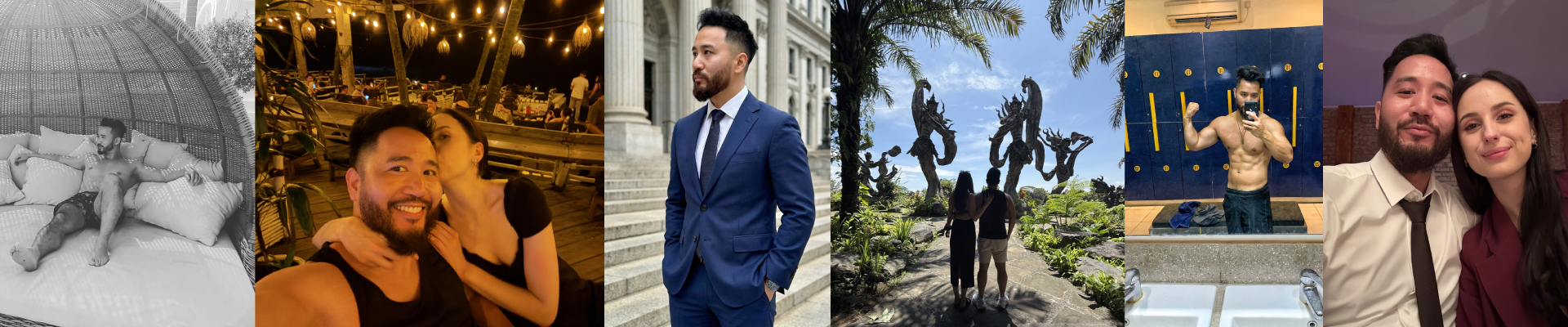
"I came to Alexander convinced I'd lost the love of my life. I was barely sleeping, couldn't focus at work, checking her Instagram every hour. By week 6, I felt like a different person. By week 12, I genuinely didn't care anymore. Not in a bitter way—I just moved on. I'm dating someone better now, and I almost laugh at how destroyed I was. This works."
— Kevin, 45, SAAS
"I tried therapy for months before finding Alex. My therapist was kind, but I wasn't getting better. Alex's approach is completely different—it's structured, it's direct, and it actually addresses what's happening in your brain. The 24/5 access was huge for me. There were moments I would have relapsed without that lifeline."
— Will, 34, Private Equity
"My ex had BPD. The relationship was chaos, but I was addicted to her. I'd tried to leave multiple times and always went back. Alex understood the dynamic immediately—apparently half his clients are leaving relationships like mine. He helped me see what I was actually addicted to and break the cycle for good. It's been over a year. I have zero desire to go back."
— Matt, 38, Senior Developer
This is for men who are done suffering and ready to do the work.
The Unbreakable Protocol is built for men who:
Are successful in their careers but feel like their personal life is falling apart
Have tried to push through, distract themselves, or "just get over it"—and nothing's working
Are tired of feeling controlled by someone who isn't even in their life anymore
Want a structured, no-bullshit approach—not endless open-ended therapy sessions
Are ready to invest in themselves the same way they'd invest in their business or career
Understand that twelve weeks of focused work beats twelve months of suffering
If you're looking for someone to validate your pain indefinitely, this isn't it.
If you want to fix this, keep reading.

Frequently Asked Questions
Q: How is this different from therapy?
Therapy is often open-ended, exploratory, and focused on processing emotions at whatever pace feels comfortable. That's useful for some things. It's not designed for this.
The Unbreakable Protocol is structured, time-bound, and treats breakup recovery as a specific psychological problem with a specific solution. We're not here to explore your childhood for months. We're here to break an addiction, process grief, and rebuild your identity in twelve weeks.
Q: Is this confidential?
Strictly. Everything shared in our sessions is protected by NDAs. Many of my clients are founders, executives, and high-net-worth individuals — some with military backgrounds and government clearances. So let's just say: I'm strongly incentivized not to get sued into oblivion or arrested by the Federal Government.
Q: I've been struggling for months. Can this really be fixed in 12 weeks?
Yes. The length of time you've been suffering has more to do with your approach than the severity of the breakup. Men who've been stuck for six months or a year often make rapid progress once they have the right framework. Twelve weeks is enough time—if you do the work.
Q: What if I still want her back?
That's normal. Part of your brain is still addicted. But here's what I can tell you: by the end of this process, you won't want her back. You'll see the relationship clearly—what it actually was, not what you hoped it would be. Every client I've worked with reaches this point. It's not a loss. It's clarity.
Q: My ex may have had BPD (or similar). Do you work with that?
Extensively. About half my clients are coming out of relationships with high-conflict, emotionally dysregulated, or personality-disordered partners. These situations require a specific understanding—of trauma bonding, intermittent reinforcement, the addiction cycle unique to these dynamics. I specialize in this.
Q: What does the time commitment look like?
One coaching session per week (60-90 minutes), one seminar call per week (60 minutes), plus the course materials at your own pace. The real work happens in how you live your life between sessions—following the protocol, staying in contact with me when you need support, doing the exercises. Budget a few hours per week total.
Q: Do I have to do any group work with other people?
No. The weekly webinars are broadcast-style — you watch, you learn, you implement. Your camera is off. You can submit questions anonymously. Nobody sees you, nobody knows you're there.
The only person you interact with directly is me, in our private 1-on-1 sessions.
Q: How does the guarantee work?
The guarantee requires one thing from you: compliance. Follow the protocol. Do the exercises. Show up. If you do all of that and you're still stuck after 12 weeks, I'll keep working with you until you're not. That's it. I don't need a page of fine print because I've never had a client who followed the protocol and didn't get better. Your only job is to show up and follow instructions. I'll handle the rest.
Ready to Rebuild?
Most men in this program have invested more in a single watch, car upgrade, or vacation they barely remember. The Unbreakable Protocol costs less—and the ROI is for the rest of your life.
Twelve weeks from now, you'll either be the same man you are today—still stuck, still checking, still wondering what went wrong—or you'll be someone unrecognizable. Stronger. Clearer. Free.
The only difference is what you do right now.
P.S. — You've probably read a dozen sales pages like this. Here's what makes this one different: if you do the work and you're not fixed in 12 weeks, I keep working with you until you are. Free. I don't make that offer because I'm generous. I make it because I've never had to honor it.